
DC-3 Floatplane Makes a Splash
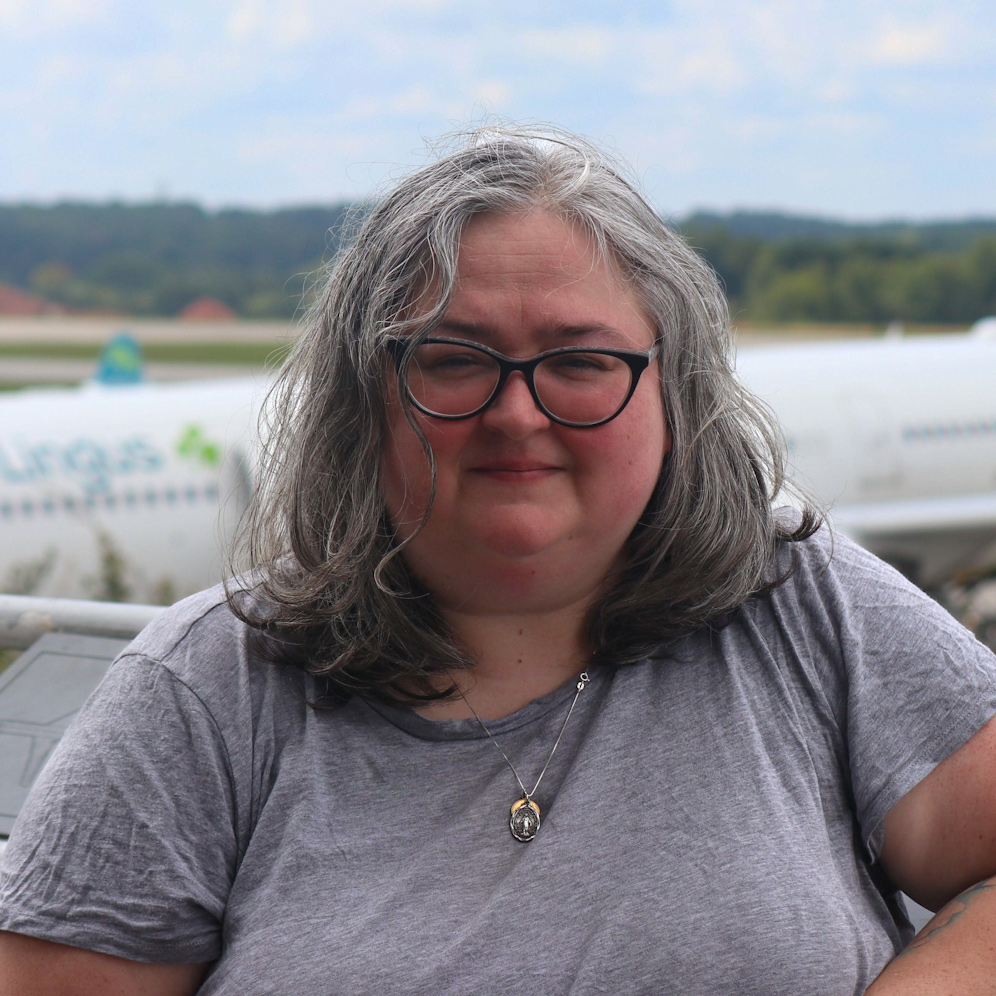

Interview by Savannah Bess
You may have seen her already going viral across all of social media, grabbing attention, not only from the aviation world, but from anyone thinking, "This thing actually flies?!" Or conversely, "This thing actually floats?!" Both questions are valid, and both are an unequivocal YES! N130Q - a DC-3/C-53D-DO amphibian conversion - made her second public showing since 2024, at the 52nd annual International Seaplane Fly-In in Greenville, Maine, September 10th-13th. This historic, unique aircraft is the product of Dick Folsom, founder of Folsom Air Service on Moosehead Lake in Greenville, a major seaplane base that is host of the fly-in. His goal was to recreate the experimental XC-47C that was attempted by the Army Air Corps deep into WWII. I will link the reading audience below to two excellent articles courtesy of Vintage Aviation News, and refer you to the definitive book on the DC-3 floatplane, "The Glorious DC-3 On Floats: An Unwritten History of the World's Largest Floatplane" by Jakob H. McKenney. However, while we can spend great deal of time admiring the technical aspects of how this plane came into being, I wanted to know what it was like for the man in the left seat for both the 2024 and 2026 flights: I got Eric Zipkin, president of the Tunison Foundation, founder and CEO of Tradewind Aviation on the phone, and you'll find him behind the yoke of Placid Lassie and many other DC-3s. I wanted to get his perspective not just as a pilot, but also the emotions behind flying 130Q - and he obliged, with nary a peep from me!
Our initial discussion was why, exactly, IS there just one DC-3 floatplane, and why was the XC-47C so unsuccessful.
ERIC: I think when you unpeel the layers of the onion, the people that were judging whether or not the floatplane were actually NOT floatplane pilots. They were just regular Army Air Corps test pilots who may not have had any seaplane experience. My experience has been, it's actually a quite good seaplane, very well-mannered on the water. I haven't been working the airplane mercilessly, but the amount that I HAVE had been able to fly the airplane, it performs quite nicely in the water and is fairly forgiving.
SB: Do you think you came to that [conclusion] because of your experience as a floatplane instructor?
ERIC: Yeah, that's how I kinda came to this. I started flying the DC-3 in 2010, for Placid Lassie and a number of other DC-3s for quite some time, going back and forth across the Atlantic, for the D-Day anniversaries, I do a lot of instruction in the DC-3, but my first real flying job was teaching people how to fly floatplanes in Connecticut, so I had a lot of experience flying, not only floatplanes, but also instructing in floatplanes. So, when they were looking for someone who had a lot of experience in the DC-3, and also had a lot of floatplane experience, a kind of varied area, that's how Rodney and the rest of the team around the airplane reached out to me, to see if I would be willing to help them out, get the airplane flying. The other big challenge is that, before we started flying it recently, the plane had been sitting for almost twenty years. And you know, outside in the Maine weather, that's never easy on an airplane.
SB: That weathers it real quick.
ERIC: Yeah, and so waking up an airplane that hasn't flown in a long period of time, is always an uncertain process. So there's twofold things. One, is learning how to operate the DC-3 floatplane, and then there's the secondary portion, which is waking up a dormant airplane, which has actually been the bigger challenge here, because the airplane hasn't flown in such a long time. The airplane is perfectly airworthy and flyable, (but) the next step for the airplane is to really start doing a restoration to get the airplane that we can fly it more reliably.
SB: That's why there was a two year gap in-between flights. It's just a matter of maintenance.
ERIC: Yep. September 24th [2024], I guess when we first flew that airplane, we flew three or four times, and on the fourth time, we had a mechanical problem. Nothing too major. But by then, it was late in fall, that we ran out of the weather window to keep flying the airplane, to repair it and keep flying. We went to go fly the airplane [again in 2025], I think AOPA covered it. Unfortunately, we had another mechanical problem that ultimately necessitated replacing the propeller. So we were done for that season.
Lo and behold, replaced the propeller, did a bunch of other work on the airplane, and we were able to fly, was it Labor Day, and then a little bit at the seaplane fly-in. So I'm hopeful that we'll be able to fly some more later in the fall, and that we'll be able to ultimately get the airplane in a hangar this winter, so that we can continue the restoration progress.
SB: That sounds great - and for you personally, having been the PIC for both the 2024 flight and a couple of weeks ago, what was it like for you emotionally? Because you have the privilege of flying this airplane that's so unique. Was it any different than a thrill you get from any other DC-3?
ERIC: It is probably the coolest airplane I've ever flown. I love the DC-3. I love float planes. I have been very, very fortunate to fly a lot of really, really cool airplanes, but this takes the cake. And the other element, which is just kind of a personal element, is that I remember this airplane from when I was first learning to fly.
SB: Wait. Oh wow - really?
ERIC: I think I was nineteen or twenty years old, and I was looking for places to fly to build time. I flew a 172 all at the way up to Greenville, Maine, in the early spring, and early spring in Connecticut where I'm from, trees were blooming, trees were getting green. Well, when you go to Maine in the early spring, it's still winter there! I didn't realize this. So I ended up there, early in the beginning of May, and the airport was effectively closed. There was no fuel, and there was nobody there. So I'm poking around trying to find a spot to get fuel for my airplane. And I bumped into Dick Folsom, of Folsom's Air Service, who was the progenitor who started this whole thing. Dick was there and he was like, oh yeah, I'll help you out finding some fuel. He gave me a ride into town so I could get a sandwich for lunch.
SB: I love that kind of small town service.
ERIC: He got to talking, and he was telling me, hey, let me show you this airplane that my son and I got just flying just recently, the DC-3 floatplane. He takes me out to the airplane, sitting there on the ramp - and you know, like I said - I was probably nineteen or twenty years old. Just to get near a DC-3 was like a thrill. Much less a DC-3 floatplane. Then he says, go on up and go into the airplane. And I got to go in, crawl all over the airplane, get up on the floats. This was way before cell phone cameras and all that sort of stuff. But I remember vividly Dick Folsom showing me the airplane, showing me all of the structural work that they had done, to mount the floats because they had to reverse engineer all of the float mounting system. They effectively reverse engineered the whole thing, which was really, really cool. Long story short, move on probably twenty years later, I remember going into the fly-in, probably in the early 2000s with my father, watching the airplane fly. Then fast forward to 2024, and I get a phone call saying, "Hey, would you have interest in flying this airplane?"
SB: So you already had a bond with her anyway.
ERIC: Yeah, that was really kind of cool. You're flying a one-of-a-kind airplane; you're flying something that nobody living could tell you about how it was like to fly it. Unfortunately, Max Folsom passed away a number of years ago, so there was no one there to tell me. You're kind of playing test pilot, which is... there's some pucker factors.
SB: Perfect way of putting it...
ERIC: It's just, you go about it very methodically, Rodney and his team on the maintenance side have been really diligent about trying to get the airplane safely operational. And we'll go from there.
Thanks for the update, Eric! We'll be keeping our eyes on the sky - and on the water - for more of 130Q's adventures.
Vintage Aviation News links:


Comments